

Ultrasound Guided Breast Biopsy CPT Code: A Comprehensive Overview
Breast biopsies utilizing image guidance‚ specifically ultrasound‚ are crucial for diagnosis; CPT code 19083 represents this procedure‚ alongside market growth and coding updates.
Breast biopsies are essential diagnostic procedures performed to investigate suspicious areas detected through imaging techniques like mammography or ultrasound. These procedures involve extracting tissue samples from the breast for microscopic examination by a pathologist‚ aiding in the detection of cancerous or precancerous cells. Biopsies are crucial for accurate diagnosis and treatment planning.
Several types of breast biopsies exist‚ each utilizing different guidance methods to ensure precise tissue sampling. These include fine-needle aspiration‚ core needle biopsy‚ vacuum-assisted biopsy‚ and surgical biopsy. The choice of biopsy type depends on factors like lesion size‚ location‚ and characteristics. Image-guided biopsies‚ such as ultrasound-guided procedures‚ enhance accuracy and minimize invasiveness. Understanding the associated CPT codes‚ like 19083 for ultrasound guidance‚ is vital for proper billing and reimbursement.

What is an Ultrasound Guided Breast Biopsy?
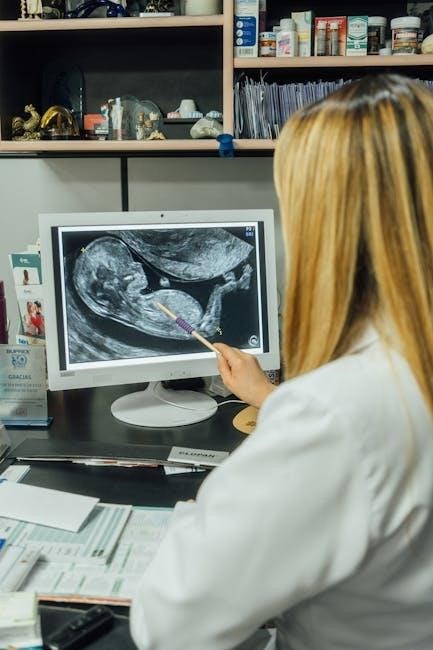
An ultrasound-guided breast biopsy is a minimally invasive procedure used to obtain tissue samples from suspicious areas within the breast‚ utilizing real-time ultrasound imaging for precise guidance. During the procedure‚ a small probe emitting ultrasound waves is placed on the skin‚ creating images of the breast tissue.
A thin needle is then inserted through the skin and into the targeted area‚ guided by the ultrasound images. This allows the radiologist to accurately sample the suspicious tissue while minimizing damage to surrounding healthy tissue. This technique is particularly useful for lesions visible on ultrasound but not easily detected on mammography. The procedure is typically performed on an outpatient basis and is coded as CPT code 19083‚ reflecting the image guidance utilized.
Indications for Ultrasound Guided Breast Biopsy
Ultrasound-guided breast biopsies are indicated when imaging reveals suspicious findings requiring further investigation. Common indications include palpable breast lumps‚ particularly those newly discovered or changing in size or shape‚ and abnormalities detected during routine ultrasound screenings.
Specifically‚ these biopsies are often performed on solid masses‚ cysts with concerning features‚ or areas of architectural distortion visible on ultrasound. They are also utilized to evaluate nipple discharge‚ especially if bloody or spontaneous. The procedure‚ coded as CPT 19083‚ is crucial for diagnosing breast cancer and other benign breast conditions‚ guiding appropriate treatment decisions. Accurate diagnosis is paramount‚ and this biopsy method provides a targeted approach.
CPT Codes for Breast Biopsies: An Overview
CPT codes are essential for accurate billing and documentation of breast biopsy procedures. Several codes exist‚ depending on the guidance method used. CPT 19083 specifically denotes an image-guided breast biopsy utilizing ultrasound. Other codes include 19081 for stereotactic/tomosynthesis guidance and 19085 for MRI guidance.
These codes differentiate the techniques employed‚ impacting reimbursement rates. Correct code selection is vital for avoiding claim denials. Furthermore‚ codes like 76942 may be used for ultrasound-guided lymph node biopsies performed concurrently. Understanding these distinctions‚ particularly regarding CPT 19083‚ is crucial for healthcare providers and coders ensuring proper billing practices within the breast biopsy landscape.
Understanding CPT Code 19083
CPT code 19083‚ maintained by the American Medical Association‚ specifically represents a medical procedural code for an ultrasound-guided breast biopsy.
Detailed Breakdown of CPT Code 19083

CPT code 19083 encompasses the image-guided percutaneous needle placement for breast biopsy‚ utilizing ultrasound guidance. This code specifically covers the procedure where a needle is inserted‚ guided by real-time ultrasound imaging‚ to obtain a tissue sample from a suspicious area within the breast.
The procedure involves locating the lesion with ultrasound‚ localizing the area with anesthesia‚ and then carefully directing the biopsy needle to collect tissue. It’s important to note that 19083 represents the core component of the biopsy itself‚ and doesn’t inherently include imaging interpretation. Reimbursement policies can vary‚ so understanding payer-specific guidelines is crucial. The global breast biopsy market is experiencing growth‚ with ultrasound guidance being a significant contributor.
Accurate coding with 19083 is vital for appropriate billing and reimbursement‚ reflecting the skill and precision involved in ultrasound-guided breast biopsies.
What Procedures are Included in 19083?

CPT code 19083 specifically details image-guided percutaneous needle placement for breast biopsy using ultrasound. This includes the entire process of obtaining a tissue sample from a suspicious breast lesion under ultrasound visualization. Key components are lesion localization via ultrasound‚ local anesthetic administration‚ and the actual needle insertion to collect the tissue core.
It covers biopsies performed on both palpable and non-palpable lesions identified through imaging. While 19083 doesn’t automatically include imaging interpretation (often billed separately)‚ it does encompass the guidance provided by the ultrasound during the needle placement. The growing breast biopsy market reflects increased utilization of this technique.
Furthermore‚ it’s essential to remember that lymph node biopsies performed concurrently and guided by ultrasound may require additional‚ separate CPT codes like 76942.
ICD-10 Codes Commonly Associated with 19083
Selecting the correct ICD-10 code is vital when billing for CPT code 19083 (ultrasound-guided breast biopsy). Common codes reflect the reason for the biopsy‚ often relating to a suspicious breast mass or abnormality. R92.0 (Abnormal finding on diagnostic imaging of breast) is frequently used when investigating a newly discovered lesion.
Other relevant codes include C50.- (Malignant neoplasm of breast)‚ if cancer is suspected‚ and D24.- (Benign neoplasm of breast) for potentially benign findings. N60.1 (Inflammatory conditions of the breast) may apply if inflammation is the primary concern.
Accurate coding ensures appropriate reimbursement and reflects the clinical context. The global breast biopsy market’s growth necessitates precise documentation and coding practices‚ aligning ICD-10 codes with the specific clinical indication for the ultrasound-guided procedure.
Billing and Reimbursement Considerations for 19083
Billing for CPT code 19083‚ the ultrasound-guided breast biopsy‚ requires meticulous attention to detail. Reimbursement rates vary based on payer (Medicare‚ Medicaid‚ commercial insurance) and geographic location. Proper documentation‚ including the clinical indication‚ imaging findings‚ and biopsy technique‚ is crucial for claim approval.
Modifiers may be necessary to indicate multiple biopsies performed at the same session or if the procedure was part of a larger surgical procedure. Bundling rules can affect reimbursement; for example‚ the ultrasound guidance itself isn’t separately billable.
Staying updated on coding changes and payer policies is essential‚ given the evolving breast biopsy market. Accurate coding‚ coupled with comprehensive documentation‚ maximizes reimbursement potential and minimizes claim denials.
Comparing Ultrasound Guidance with Other Guidance Methods
Breast biopsy guidance options include ultrasound (19083)‚ stereotactic (19081)‚ and MRI (19085)‚ each suited for different lesion characteristics and clinical scenarios.
Ultrasound vs. Stereotactic Guidance (CPT 19081)
Ultrasound guidance (CPT 19083) and stereotactic guidance (CPT 19081) represent distinct approaches to breast biopsies. Ultrasound utilizes sound waves to visualize lesions‚ proving ideal for palpable masses or those easily seen with ultrasound. It’s real-time imaging allows for dynamic needle placement.

Conversely‚ stereotactic guidance employs X-rays to pinpoint lesions visible on mammography‚ particularly microcalcifications. This method excels in accuracy for non-palpable‚ small targets. However‚ it lacks real-time visualization and involves radiation exposure.

The choice depends on lesion characteristics; ultrasound for cysts and readily visible masses‚ stereotactic for microcalcifications and difficult-to-visualize targets. Both are crucial tools‚ impacting diagnostic accuracy and patient care.
Ultrasound vs. MRI Guidance (CPT 19085)
Comparing ultrasound guidance (CPT 19083) with MRI guidance (CPT 19085) for breast biopsies reveals key differences. Ultrasound is widely accessible‚ cost-effective‚ and provides real-time imaging‚ making it suitable for many palpable or easily visualized lesions.

MRI guidance‚ however‚ offers superior soft tissue contrast‚ crucial for detecting and targeting small‚ non-palpable lesions that may be obscured on mammography or ultrasound. It’s particularly valuable in dense breast tissue or for evaluating lesion extent.
While MRI is more sensitive‚ it’s also more expensive‚ time-consuming‚ and less readily available. The choice hinges on lesion characteristics‚ breast density‚ and clinical suspicion‚ ensuring optimal diagnostic accuracy.
Choosing the Appropriate Guidance Method
Selecting the optimal guidance method – ultrasound (CPT 19083)‚ stereotactic (19081)‚ or MRI (19085) – for a breast biopsy demands careful consideration. Factors include lesion visibility‚ size‚ location‚ and patient-specific characteristics like breast density;
Ultrasound excels for palpable masses and lesions easily seen on ultrasound‚ offering real-time guidance and accessibility. Stereotactic biopsy is preferred for microcalcifications or lesions only visible on mammography. MRI guidance is invaluable for small‚ non-palpable lesions‚ especially in dense breast tissue.
Clinicians must weigh the benefits of each technique – accuracy‚ cost‚ availability‚ and patient comfort – to determine the most effective approach for a definitive diagnosis‚ ensuring appropriate CPT code assignment.
The Ultrasound Guided Biopsy Procedure
CPT code 19083 encompasses a procedure involving patient preparation‚ real-time ultrasound imaging‚ needle insertion‚ sample collection‚ and essential post-biopsy care.
Patient Preparation
Prior to an ultrasound-guided breast biopsy‚ coded as CPT 19083‚ thorough patient preparation is essential. Patients are typically informed about the procedure‚ its risks‚ and benefits‚ obtaining informed consent.
Medication review is crucial; blood thinners may need temporary adjustment to minimize bleeding risk. Patients are often advised to avoid underwire bras or deodorant on the day of the procedure.
The examination table is positioned for optimal access‚ and the breast is prepped with a sterile solution. A clear explanation of sensations during the biopsy – pressure‚ mild discomfort – helps alleviate anxiety. Proper positioning and clear communication are vital for a successful and comfortable experience‚ directly impacting the accurate application of CPT code 19083.
The Biopsy Process Step-by-Step
The ultrasound-guided breast biopsy‚ represented by CPT code 19083‚ begins with the patient positioned comfortably. A sonographer applies gel to the breast and uses an ultrasound probe to visualize the target area.
Local anesthesia is administered to numb the area‚ minimizing discomfort. A small incision is made‚ and a biopsy needle – often core needle or vacuum-assisted – is guided by ultrasound to the suspicious tissue.
Multiple samples are typically collected to ensure accurate diagnosis. Pressure is applied to the incision site to control bleeding. The procedure is carefully documented‚ supporting accurate CPT 19083 billing. The entire process‚ guided by real-time imaging‚ ensures precise tissue acquisition for pathological analysis.
Post-Biopsy Care and Follow-Up
Following an ultrasound-guided breast biopsy (CPT 19083)‚ patients receive specific instructions for post-procedure care. Expect mild discomfort‚ bruising‚ and swelling at the incision site‚ managed with over-the-counter pain relievers and ice packs.
Patients are advised to avoid strenuous activity for 24-48 hours. Keeping the incision clean and dry is crucial to prevent infection. Any signs of infection – increased pain‚ redness‚ or discharge – require immediate medical attention.
Follow-up appointments are scheduled to discuss biopsy results and determine the next steps in care. Accurate CPT 19083 coding ensures appropriate reimbursement‚ while diligent follow-up guarantees optimal patient outcomes and continued monitoring.
Market Trends in Ultrasound Guided Breast Biopsy
The global ultrasound-guided breast biopsy market is expanding‚ projected to reach US $1.09 billion by 2032‚ driven by technological advancements and CPT 19083 utilization.
Global Market Size and Growth Forecast
The global breast biopsy market‚ encompassing core needle‚ vacuum-assisted‚ and fine needle aspiration techniques‚ demonstrates significant expansion. Recent reports indicate the market is poised for substantial growth‚ with projections estimating a valuation of US $3.8 billion by 2033. Specifically‚ the ultrasound-guided breast biopsy segment‚ often utilizing CPT code 19083 for billing‚ is a key driver of this expansion.
Current forecasts anticipate sales reaching US $1.09 billion by 2032‚ exhibiting a Compound Annual Growth Rate (CAGR) of 8% during the forecast period. This growth is fueled by increasing cancer incidence rates‚ rising awareness regarding early detection‚ and continuous technological innovations in imaging and biopsy procedures. The demand for minimally invasive diagnostic methods‚ like ultrasound-guided biopsies‚ further contributes to market momentum. These trends suggest a robust and evolving landscape for ultrasound-guided breast biopsy procedures globally.
Technological Advancements in Ultrasound Biopsy
Recent advancements are revolutionizing ultrasound-guided breast biopsy procedures‚ impacting both diagnostic accuracy and patient comfort. Deep learning-based computer-aided diagnosis (CAD) systems are emerging‚ assisting radiologists in lesion characterization and improving the precision of biopsies coded with CPT 19083. These systems analyze ultrasound images‚ potentially reducing false negatives and enhancing early cancer detection.
Furthermore‚ improvements in ultrasound transducer technology deliver higher resolution imaging‚ allowing for better visualization of small or subtle lesions. Vacuum-assisted biopsy (VAB) devices‚ often used in conjunction with ultrasound guidance‚ continue to evolve‚ offering more efficient tissue sampling and minimizing patient discomfort. Ongoing research focuses on integrating real-time elastography with ultrasound‚ providing information about tissue stiffness‚ which can aid in differentiating benign from malignant lesions‚ ultimately refining the biopsy process.
Key Players in the Ultrasound Guided Breast Biopsy Market
The global ultrasound-guided breast biopsy market features several prominent companies driving innovation and market growth‚ impacting procedures coded under CPT 19083. Key players include those specializing in medical imaging equipment‚ biopsy devices‚ and related technologies. These companies are actively involved in research and development‚ aiming to improve diagnostic accuracy and patient outcomes.

While a definitive list requires extensive market research‚ major contributors likely encompass established medical device manufacturers and emerging technology firms. Competition centers around advancements in image quality‚ biopsy needle design‚ and integration of artificial intelligence for enhanced lesion detection. These companies also focus on expanding their global reach and strengthening partnerships with healthcare providers to facilitate wider adoption of advanced ultrasound biopsy techniques.
Coding Updates and Changes
CPT code 19083‚ for ultrasound-guided breast biopsy‚ requires continuous monitoring for revisions by the American Medical Association to ensure accurate billing practices.
Recent Changes to CPT Codes Related to Breast Biopsy
While significant‚ sweeping changes to CPT code 19083 (ultrasound-guided breast biopsy) haven’t been widely reported recently‚ diligent monitoring remains essential. Coders must stay abreast of any technical component or global fee schedule updates released annually by the Centers for Medicare & Medicaid Services (CMS).
Historically‚ updates often involve clarification regarding bundled services or appropriate use criteria. For instance‚ documentation requirements for image guidance and lesion characteristics may be refined. Furthermore‚ changes in coding guidelines related to co-reporting or the use of ancillary services during the biopsy procedure can impact reimbursement.
Payers may also implement local coverage determinations (LCDs) that affect coding for ultrasound-guided biopsies‚ necessitating careful review of individual payer policies. Staying informed through professional coding organizations and regular updates from CMS is crucial for compliant billing.
Staying Current with Coding Regulations
Maintaining accurate coding for ultrasound-guided breast biopsies (CPT 19083) requires continuous professional development. Subscribing to updates from the American Medical Association (AMA) regarding CPT code changes is paramount. Regularly reviewing guidance from the Centers for Medicare & Medicaid Services (CMS) regarding National Coverage Determinations (NCDs) and Local Coverage Determinations (LCDs) is also vital.
Participation in coding workshops and webinars focused on radiology and breast imaging ensures familiarity with evolving regulations. Professional coding organizations‚ like the American Academy of Professional Coders (AAPC)‚ offer valuable resources and certifications.
Furthermore‚ monitoring payer-specific policies and bulletins is crucial‚ as they can deviate from national guidelines. Implementing a robust internal auditing process helps identify and correct coding errors‚ ensuring compliance and maximizing appropriate reimbursement for CPT 19083.
Resources for Accurate Coding Information
Several resources are available to ensure accurate coding for ultrasound-guided breast biopsies utilizing CPT code 19083. The American Medical Association (AMA) provides the official CPT manual and online resources for code descriptions and updates. The Centers for Medicare & Medicaid Services (CMS) website offers detailed information on coverage policies and billing guidelines.
Professional coding organizations‚ such as the American Academy of Professional Coders (AAPC) and the American Health Information Management Association (AHIMA)‚ offer coding courses‚ certifications‚ and access to coding hotlines.
Additionally‚ payer-specific websites often contain detailed coding information and claim submission guidelines. Radiology-focused societies‚ like the Radiological Society of North America (RSNA)‚ frequently publish coding updates and educational materials relevant to breast imaging procedures.
CPT code 19083‚ representing ultrasound-guided breast biopsies‚ remains a critical component of diagnostic breast care. Accurate coding and billing are essential for appropriate reimbursement and data collection‚ influencing market trends and technological advancements.
The global breast biopsy market is experiencing growth‚ projected to reach significant valuations by 2033‚ driven by increasing cancer incidence and improved imaging technologies. Staying current with CPT code updates and payer guidelines is paramount for healthcare providers.
Continued research and development in ultrasound technology‚ coupled with diligent coding practices‚ will contribute to enhanced patient care and optimized healthcare resource allocation within the evolving landscape of breast health.