Marrakech Travel Guide: A Comprehensive Overview
Marrakech beckons with vibrant culture, historical sites, and bustling markets; planning your trip requires understanding seasonal weather, budgeting, and accommodation options.
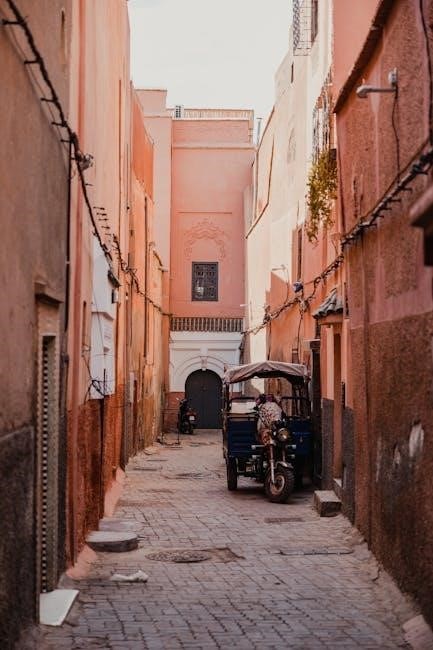
Marrakech, a captivating city nestled in Morocco, is a sensory explosion of sights, sounds, and aromas, offering an unforgettable travel experience. Often called the “Red City” due to the hue of its buildings, it’s a place where ancient traditions meet modern life. The heart of Marrakech lies in its medina, a UNESCO World Heritage site, a labyrinthine network of narrow streets brimming with souks (markets), riads, and historical landmarks.
From the iconic Jemaa el-Fnaa square, alive with storytellers, musicians, and food stalls, to the serene beauty of the Koutoubia Mosque, Marrakech offers a diverse range of attractions. The city’s unique architecture, particularly its traditional riads – courtyard houses – provides an authentic and atmospheric accommodation experience. Marrakech is a destination that truly immerses you in Moroccan culture, promising adventure and discovery at every turn.
Best Time to Visit Marrakech
Determining the best time to visit Marrakech hinges on your tolerance for heat and budget considerations. Spring (March-May) and Autumn (September-November) generally offer the most pleasant weather, with warm days and cooler evenings – ideal for exploring the city’s sights. These shoulder seasons avoid the intense summer heat and the potential for winter showers.
While late January can be the cheapest time, temperatures can still be cool. Summer (June-August) brings scorching temperatures, potentially exceeding 40°C (104°F), making sightseeing challenging. However, hotel prices may be lower. Balancing hotel costs versus airfare is crucial, especially if budget is a primary concern. Consider your priorities – comfort, affordability, or avoiding crowds – when planning your trip to this vibrant Moroccan city.
Seasonal Weather Patterns
Marrakech experiences a semi-arid climate with distinct seasonal variations. Summers (June-August) are intensely hot and dry, with average highs exceeding 30°C (86°F), often reaching scorching levels. Rainfall is minimal during these months. Winters (December-February) are mild, with average highs around 18°C (64°F), but evenings can be cool, and occasional showers are possible.
Spring (March-May) and Autumn (September-November) offer the most agreeable weather. Temperatures are warm and comfortable, averaging between 20°C (68°F) and 25°C (77°F). These seasons boast plenty of sunshine and minimal rainfall, making them ideal for outdoor activities and exploration. The unwieldy high temperatures in summer and minimal winter showers influence the best time to visit.
Peak vs. Off-Peak Seasons & Prices
Marrakech’s peak tourist seasons are spring (March-May) and autumn (September-November), coinciding with the most pleasant weather. During these periods, expect higher prices for flights and accommodation, and larger crowds at popular attractions. Booking well in advance is crucial to secure availability and potentially better rates.
The off-peak seasons – summer (June-August) and winter (December-February) – offer significant savings. While summer can be excessively hot, and winter evenings cool, prices are considerably lower. Late January is often cited as the cheapest time to visit. Balancing hotel costs versus airfare is key for budget travelers. A solo traveler might spend $30-$50 daily on a budget, $80-$150 mid-range, or $200+ for luxury.
Accommodation in Marrakech
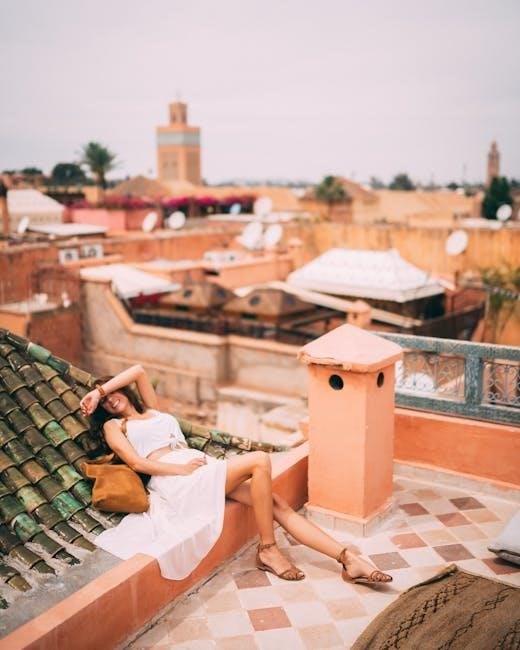
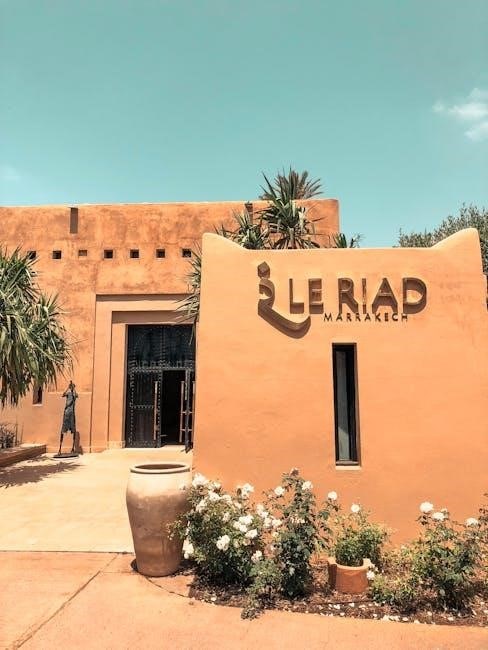
Marrakech offers a diverse range of accommodation options to suit every budget and preference. The city is particularly renowned for its traditional Moroccan houses, known as riads. These spectacular, mud-brick courtyard homes provide an authentic and atmospheric experience, often featuring intricate tilework, lush gardens, and tranquil rooftop terraces. Riads range from budget-friendly guesthouses to luxurious boutique hotels.
For those seeking modern amenities, numerous hotels and resorts are available, offering familiar comforts and services. These range from internationally branded chains to independent establishments. Choosing between a riad and a hotel depends on your desired experience; riads offer immersion in Moroccan culture, while hotels provide standardized convenience. Consider location when booking, as proximity to the medina impacts accessibility and noise levels.
Riads: Traditional Moroccan Houses
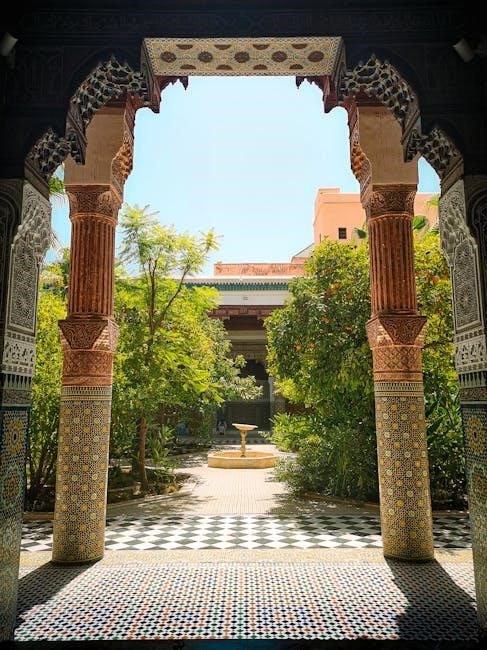
Riads are the signature structure of Marrakech, offering the most authentic accommodation experience. These traditional Moroccan houses are built around an interior courtyard, often featuring a central fountain and lush gardens, providing a tranquil escape from the bustling city. Historically, riads were homes of wealthy families, showcasing intricate tilework (zellij), carved cedarwood, and vibrant colors.
Today, many have been beautifully restored and converted into boutique hotels or guesthouses. Staying in a riad provides an immersive cultural experience, with personalized service and a sense of intimacy. Expect traditional Moroccan breakfasts, rooftop terraces for relaxation, and a peaceful atmosphere. Prices vary significantly, from budget-friendly options to luxurious retreats, but generally offer excellent value for money compared to larger hotels.
Hotels & Resorts: Modern Options
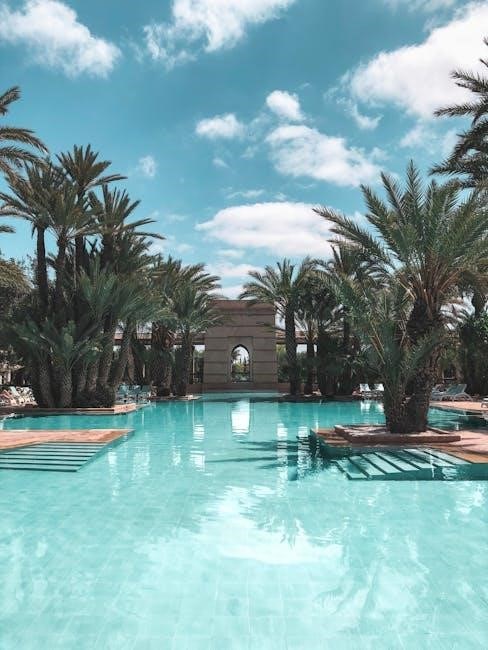
Marrakech also boasts a wide array of modern hotels and resorts, catering to travelers seeking familiar comforts and extensive amenities. These range from internationally recognized chains to locally owned establishments, offering diverse price points and styles. Expect features like swimming pools, spas, fitness centers, and multiple dining options.
Hotels often provide a more standardized experience compared to the unique charm of riads, but can be a convenient choice for families or those prioritizing specific facilities. Locations vary, with many situated in the newer Gueliz district or along the Palmeraie, offering a different perspective of the city. Balancing hotel costs versus airfare is crucial for budget-conscious travelers, as prices fluctuate depending on the season and demand. Luxury experiences are readily available, with high-end resorts offering exceptional service and opulent surroundings.
Getting Around Marrakech
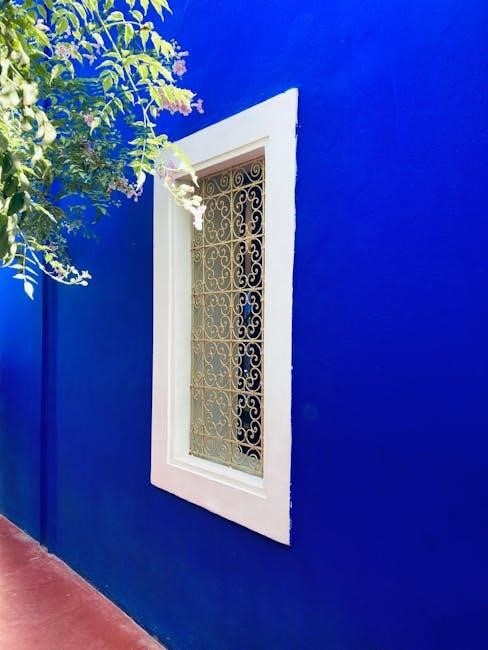
Marrakech presents various transportation options for navigating its bustling streets and exploring its diverse attractions. Taxis are readily available, though negotiating fares beforehand is essential to avoid overcharging. Understanding transportation costs is key to budgeting your trip effectively. Walking is a fantastic way to immerse yourself in the Medina’s atmosphere, but be prepared for narrow, winding alleyways and potential crowds.
Public buses offer an affordable alternative, connecting different parts of the city, but can be crowded and less convenient for tourists. Consider the distance and your comfort level when choosing a mode of transport. For longer distances or day trips, organized tours or private drivers provide a more comfortable and efficient experience. Planning your routes and factoring in travel time is crucial for maximizing your time in Marrakech.
Taxis & Transportation Costs
Marrakech taxis are plentiful, serving as a convenient, though sometimes challenging, mode of transport. Always agree on a fare before starting your journey; meters are rarely used, especially for tourists. Short trips within the city walls typically cost between 20-50 Dirhams, while longer distances to newer areas will be more expensive. Be prepared to haggle respectfully to secure a fair price;
Petit taxis (small, red taxis) operate within the city, while Grand taxis (larger, often Mercedes) serve longer routes and can be shared with other passengers. Consider using ride-hailing apps for transparent pricing, though availability may be limited. Budget travelers should factor in daily taxi expenses, potentially 30-50 Dirhams, depending on frequency of use. Remember to have small denominations of Dirhams readily available for easy payment.
Walking & Public Buses
Marrakech’s Medina is best explored on foot, allowing you to fully immerse yourself in its labyrinthine streets and vibrant atmosphere. However, be prepared for crowded pathways and occasional navigation challenges! Comfortable shoes are essential, as you’ll be covering significant distances on uneven surfaces. Outside the Medina, walking is less practical due to wider distances and traffic.
For longer journeys, Marrakech offers an affordable public bus system. Buses cover most of the city and surrounding areas, though routes can be complex for first-time visitors. Fares are incredibly cheap, typically costing just a few Dirhams. Local buses are a great way to experience daily life, but can be crowded, especially during peak hours. Consider downloading a local transit app or asking your accommodation for route guidance.
Must-See Attractions in Marrakech
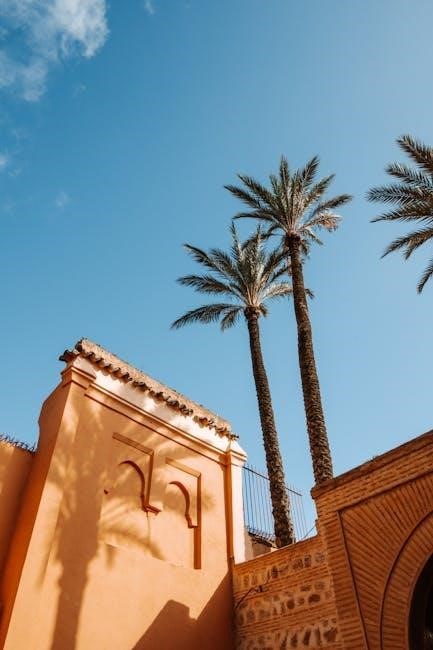
Marrakech boasts a wealth of historical and cultural landmarks. Jemaa el-Fnaa Square is the city’s vibrant heart, transforming each evening into a lively spectacle of storytellers, food stalls, and performers – a truly immersive experience. The majestic Koutoubia Mosque, visible from afar, is an architectural masterpiece, though non-Muslims cannot enter its interior.
Explore the serene beauty of the Bahia Palace, showcasing intricate Moroccan craftsmanship, and wander through the lush Majorelle Garden, a vibrant oasis created by Yves Saint Laurent. Don’t miss the Saadian Tombs, a hidden gem discovered in 1917, displaying stunning tilework and historical significance. These attractions offer a glimpse into Marrakech’s rich heritage and artistic traditions.
Jemaa el-Fnaa Square
Jemaa el-Fnaa is the pulsating heart of Marrakech, a UNESCO World Heritage site that truly comes alive after sunset. During the day, you’ll find orange juice stalls, snake charmers, and traditional water sellers. However, as evening descends, the square transforms into a mesmerizing spectacle of food stalls offering local delicacies, storytellers captivating audiences with ancient tales, and musicians filling the air with rhythmic sounds;
Be prepared for a sensory overload – the sights, sounds, and smells are intense and unforgettable. It’s a place to wander, observe, and immerse yourself in Moroccan culture. Remember to negotiate prices before enjoying any services or purchasing food, and be mindful of your belongings in the bustling crowds. It’s an experience unlike any other!
Koutoubia Mosque
The Koutoubia Mosque is Marrakech’s largest mosque, and its iconic minaret dominates the city’s skyline, serving as a crucial landmark for navigation. Built in the 12th century, it exemplifies Almohad architecture, showcasing intricate geometric designs and exquisite craftsmanship. While non-Muslims are not permitted to enter the mosque itself, the surrounding gardens offer a tranquil escape from the city’s hustle and bustle.
Stroll through the beautifully landscaped grounds, admire the minaret’s grandeur from various angles, and enjoy the fragrant orange trees and peaceful atmosphere. The gardens are particularly enchanting at sunset, offering stunning photo opportunities. It’s a place for quiet contemplation and appreciation of Moroccan artistry.
Marrakech on a Budget: Costs & Saving Tips
Marrakech can be enjoyed without breaking the bank! A daily budget of 30-50 USD is feasible for budget travelers, while mid-range experiences range from 80-150 USD, and luxury options start around 200 USD. Accommodation costs vary greatly; consider hostels or guesthouses for affordability. Embrace local eateries and street food for delicious, inexpensive meals – avoid tourist traps.
Haggle respectfully when shopping in the souks to secure better prices. Utilize public buses for transportation, which are significantly cheaper than taxis. Free activities include exploring the Medina’s labyrinthine streets and soaking in the atmosphere of Jemaa el-Fnaa square. Traveling during the off-peak season can also yield substantial savings on flights and hotels.
Daily Budget Breakdown (Budget, Mid-Range, Luxury)
Marrakech offers diverse travel styles, reflected in its cost structure. A budget traveler can manage with $30-$50 USD daily, covering hostel accommodation, street food, and public transport. This includes modest spending on attractions and souvenirs. The mid-range budget of $80-$150 USD allows for comfortable hotel stays, restaurant meals, occasional taxis, and more extensive exploration of sights.
For a luxury experience, anticipate spending $200+ USD per day. This unlocks upscale riad accommodations, fine dining, private transportation, and exclusive tours. Remember these are averages; individual spending habits significantly impact the final cost; Prioritizing experiences versus material possessions can help tailor the budget to your preferences.
Affordable Food Options
Marrakech excels in delicious, budget-friendly eats! Explore Jemaa el-Fnaa square after sunset for a vibrant street food scene – expect to pay just a few dollars for grilled meats, tagines, and fresh juices. Local cafes offer traditional Moroccan breakfasts of bread, honey, and mint tea for minimal cost.
Venture into the souks to discover small eateries serving flavorful couscous and harira soup. Don’t hesitate to try bissara, a hearty fava bean soup, a local favorite. Purchasing groceries from local markets and preparing simple meals can further reduce food expenses. Avoiding tourist-trap restaurants and embracing local spots guarantees both affordability and authenticity.
Food & Drink in Marrakech
Marrakech’s culinary scene is a delightful explosion of flavors! Traditional Moroccan cuisine centers around tagines – slow-cooked stews with meat, vegetables, and aromatic spices – and couscous, often served with a flavorful broth. Mint tea is ubiquitous, offered as a sign of hospitality and enjoyed throughout the day.
Explore local specialties like tanjiya, a slow-cooked meat dish unique to Marrakech, and pastilla, a sweet and savory pie. Jemaa el-Fnaa offers a diverse range of street food, while restaurants in the Gueliz district provide modern interpretations of Moroccan classics. Freshly squeezed orange juice is a must-try, and local pastries offer a sweet ending to any meal.
Traditional Moroccan Cuisine
Moroccan cuisine, particularly in Marrakech, is a rich tapestry of Berber, Arab, and Andalusian influences. Central to the culinary experience are tagines – slow-cooked stews brimming with meats, vegetables, fruits, and a complex blend of spices like cumin, ginger, and saffron. Couscous, often served on Fridays, is another staple, accompanied by a flavorful vegetable or meat broth.
Pastilla, a sweet and savory pie traditionally made with pigeon (now often chicken), showcases the intricate layering of flavors. Tanjiya, unique to Marrakech, is a slow-cooked meat dish prepared in a clay pot. Don’t forget the importance of mint tea, a symbol of hospitality, and the abundance of fresh, local ingredients that define Moroccan gastronomy.
Where to Find the Best Food
Jemaa el-Fnaa transforms into a vibrant open-air food market each evening, offering a sensory overload of grilled meats, snail soup, and fresh juices – a truly immersive experience. For a more refined dining experience, explore the restaurants within the riads, often serving traditional dishes with a modern twist.
The souks themselves hide culinary gems; look for small, local eateries serving authentic tanjiya and tagines. Gueliz, the modern city, boasts a range of international and Moroccan restaurants. Consider a cooking class to learn the secrets of Moroccan cuisine firsthand. Don’t hesitate to venture off the beaten path – some of the best food is found in unassuming neighborhood spots.