
Husqvarna 455 Rancher Manual: A Comprehensive Guide
This comprehensive guide details the Husqvarna 455 Rancher, 455e Rancher, and 460 Rancher chainsaws. It provides instructions for assembly, operation, maintenance, and troubleshooting, ensuring safe and efficient use.
The Husqvarna 455 Rancher, alongside its counterparts the 455e Rancher and 460 Rancher, represents a robust and reliable chainsaw designed for landowners and demanding users. This manual serves as your primary resource for understanding and safely operating this powerful tool. These models feature combustion engines and are continually refined for optimal performance.
Before first use, carefully review this guide to familiarize yourself with all components and safety precautions. Proper understanding of the instructions is crucial for preventing accidents and maximizing the lifespan of your chainsaw. This manual covers everything from initial setup and operation to detailed maintenance procedures and troubleshooting common issues. Remember to always prioritize safety and adhere to the guidelines outlined within.
Understanding the 455 Rancher Models (455, 455e, 460)
The Husqvarna 455 Rancher series – encompassing the 455, 455e, and 460 models – shares a core design philosophy focused on power and durability for demanding tasks. While fundamentally similar, subtle differences exist. The 455e Rancher is often positioned as an economical entry point, while the 455 Rancher offers enhanced features. The 460 Rancher builds upon this foundation with further refinements.
This manual applies broadly to all three models, but always consult specific diagrams and notes where variations occur, particularly regarding the saw chain installation (refer to page 29 for details). Understanding these nuances ensures you’re following the correct instructions for your specific chainsaw. All models utilize combustion engines and benefit from consistent maintenance practices detailed throughout this guide.
Safety Precautions and Warnings
Crucially, always read and understand this manual before operating your Husqvarna 455 Rancher. Disregarding instructions can lead to severe injury. Wear appropriate personal protective equipment (PPE) – including a helmet, eye protection, hearing protection, gloves, and chainsaw chaps. Ensure a firm stance and maintain a safe distance from bystanders.
Be acutely aware of potential kickback, a sudden, uncontrolled upward or forward movement of the chainsaw. Never cut above shoulder height. Regularly inspect the chain for sharpness and proper tension. Fuel the chainsaw in a well-ventilated area, and avoid operating near flammable materials. Las Husqvarna models require diligent adherence to safety guidelines to prevent accidents.

Assembly and Initial Setup
Proper assembly is vital for safe operation. This section guides you through unboxing, component identification, and initial setup of your Husqvarna 455 Rancher chainsaw.
Unboxing and Component Identification
Upon receiving your Husqvarna 455 Rancher, carefully inspect the package for any shipping damage. Once opened, verify all components are present. You should find the chainsaw itself, a guide bar, a saw chain, a combination wrench, a screwdriver, and the operator’s manual.
Familiarize yourself with key chainsaw parts: the engine, starter, fuel tank, oil tank, guide bar, chain, sprocket cover, and handle. The manual provides detailed diagrams illustrating each component’s location. Ensure the guide bar is securely attached, but do not fully tension the chain yet. Retain all packaging and documentation for potential warranty claims or future reference. Proper identification of parts is crucial for safe assembly and maintenance.
Installing the Guide Bar and Chain
Before installing, ensure the chainsaw is switched off and the spark plug is disconnected for safety. Remove the bar cover by loosening the nuts. Position the guide bar onto the chainsaw body, aligning the bar oil holes. Carefully place the saw chain around the bar, ensuring the cutting teeth face the correct direction – typically towards the engine.
Reinstall the bar cover and hand-tighten the nuts. Refer to your manual for specific torque specifications. It’s vital the chain sits correctly within the bar groove. Double-check the chain’s orientation before proceeding to tensioning. Incorrect installation can lead to improper operation and potential hazards. Always consult the Husqvarna 455 Rancher manual for detailed diagrams and instructions.
Chain Tensioning Procedures
Proper chain tension is crucial for safe and efficient operation of your Husqvarna 455 Rancher. Loosen the bar nuts slightly, allowing for adjustment. Use the tensioning screw, typically located on the side of the chainsaw, to adjust the chain’s tightness. The chain should be snug against the bar but still able to be pulled around by hand without excessive force.
A correctly tensioned chain will minimize kickback risk and prevent premature wear. After adjustment, firmly tighten the bar nuts to secure the bar and chain. Regularly check chain tension, especially during initial use, as it can stretch. Refer to the manual for specific tensioning guidelines and diagrams. Incorrect tension can damage the saw and is a safety hazard.
Sprocket and Bar Lubrication
Maintaining adequate lubrication of the sprocket and guide bar is vital for the longevity and performance of your Husqvarna 455 Rancher. Utilize a high-quality bar and chain oil specifically designed for chainsaws. Ensure the oil reservoir is filled before each use, and regularly check the oil level during operation.
The automatic oiler system delivers lubricant to the bar and chain while the saw is running. Verify the oiler is functioning correctly by observing oil distribution during operation. Clean the bar groove frequently to prevent buildup and ensure proper oil flow. A well-lubricated bar and sprocket reduce friction, minimize wear, and contribute to smoother, safer cutting. Consult your manual for recommended oil types and lubrication intervals.
Operating Instructions
Husqvarna 455 Rancher operation requires understanding starting procedures, proper cutting stances, and techniques for felling, limbing, and bucking, as detailed in this manual.
Starting the Chainsaw (Cold & Warm Start)
Cold Start Procedure: Ensure the chainsaw is on a flat surface and the chain brake is engaged. Prime the fuel bulb several times until fuel is visible. Set the choke lever to the ‘start’ position. Firmly grasp the front handle with one hand and pull the starter cord with the other, using a smooth, controlled motion. Repeat until the engine attempts to start, then disengage the choke.
Warm Start Procedure: With a warm engine, the choke is typically not required. Engage the chain brake and pull the starter cord firmly. If the engine doesn’t start immediately, briefly engage the choke and try again. Always refer to your Husqvarna 455 Rancher manual for specific instructions and safety precautions. Improper starting can lead to flooding or damage.
Proper Stance and Cutting Techniques
Stance is crucial for control and safety. Maintain a firm grip with both hands, thumbs wrapped around the handles. Position your feet shoulder-width apart for balance, with a slight bend in your knees. Keep your body to the side of the cutting plane, never directly behind the saw.
Cutting Techniques: Use the lower part of the bar for bucking and the upper part for felling. Avoid pinching the bar, which can cause kickback. Let the saw do the work; don’t force it. Always plan your cuts and be aware of your surroundings. Refer to your Husqvarna 455 Rancher manual for detailed illustrations and safety guidelines. Proper technique minimizes risk and maximizes efficiency.
Felling Trees – Basic Techniques
Felling requires careful planning and execution. First, assess the tree’s lean, wind direction, and any obstacles. Create an open escape path at a 45-degree angle from the anticipated fall line. Begin with a notch cut on the side of the tree in the direction you want it to fall, typically one-third of the tree’s diameter.
Next, make the back cut, slightly higher than the notch, leaving a hinge of uncut wood. This hinge controls the fall. Refer to your Husqvarna 455 Rancher manual for detailed diagrams. Use wedges to help direct the fall if needed. Always be aware of potential kickback and maintain a safe distance after initiating the cut.
Limbing and Bucking Operations
Limbing involves removing branches from a felled tree. Always work from the base towards the top, keeping the tree between you and the chainsaw. Be mindful of spring poles – branches under tension. The Husqvarna 455 Rancher manual emphasizes maintaining a firm grip and stable stance.
Bucking is cutting the trunk into shorter lengths. Support the wood to prevent pinching the bar. Avoid cutting with the tip of the bar. For logs on a slope, buck from the uphill side. Understand compression and tension sides of the log to prevent binding. Consult your manual for specific techniques and safety precautions regarding these operations.

Maintenance and Servicing
Regular maintenance, as detailed in the Husqvarna 455 Rancher manual, is crucial for optimal performance and longevity. This includes cleaning, inspection, and timely replacement of parts.
Air Filter Cleaning and Replacement
Maintaining a clean air filter is paramount for the Husqvarna 455 Rancher’s engine health. A dirty filter restricts airflow, reducing power and increasing fuel consumption. The manual recommends regular inspection – ideally after each use, or at least daily for professional applications.
To clean, remove the filter cover and carefully brush away loose debris. For paper filters, gently tap to dislodge dirt; avoid using water. Foam filters can be washed with mild soap and water, then thoroughly dried before re-oiling with air filter oil.
Replacement is necessary when the filter is damaged or excessively dirty. Refer to the manual for the correct filter type and part number. A clean air filter ensures efficient combustion and prolongs engine life.
Spark Plug Inspection and Replacement
Regular spark plug inspection is crucial for optimal Husqvarna 455 Rancher performance. The manual advises checking the plug every 50-100 operating hours, or sooner if experiencing starting difficulties. Remove the plug and inspect the electrodes for fouling, wear, or damage. A healthy plug should have a tan or light gray color.
If the plug is oily, blackened with carbon, or shows signs of wear, replacement is necessary. Use the correct spark plug specified in the manual – using an incorrect plug can damage the engine. Ensure the new plug is gapped correctly before installation.
Proper spark plug maintenance guarantees efficient combustion, easy starting, and extended engine life for your chainsaw.
Fuel System Maintenance (Fuel Mix Ratio)
Maintaining the Husqvarna 455 Rancher’s fuel system is vital for reliable operation. Always use a fresh fuel mix of gasoline and two-stroke oil, adhering strictly to the manual’s recommended ratio. Typically, this is a 50:1 ratio (50 parts gasoline to 1 part oil), but consult your specific model’s documentation for confirmation.
Use high-quality two-stroke oil designed for air-cooled engines. Avoid fuels containing ethanol, as it can damage the fuel system. Before prolonged storage, drain the fuel tank and carburetor to prevent fuel degradation and gumming. Regularly inspect the fuel lines for cracks or leaks, replacing them as needed.
Proper fuel mixture ensures optimal lubrication and prevents engine damage.
Chain Sharpening Guide
Maintaining a sharp chain is crucial for safe and efficient cutting with your Husqvarna 455 Rancher. A dull chain requires more force, increasing kickback risk. Use a round file of the correct size, guided by a sharpening file holder, to maintain the correct filing angle. Ensure all cutters are filed to the same length and depth.
File each cutter in a smooth, consistent motion, avoiding overheating. Pay attention to the depth gauges; these should be filed down if they become too high after sharpening the cutters. Regularly check the chain for wear and damage, replacing it when necessary. Refer to the manual for detailed sharpening diagrams and instructions.
Bar Maintenance and Flip Instructions
Proper bar maintenance extends the life of your Husqvarna 455 Rancher’s guide bar and ensures optimal performance. Regularly clean the bar groove to remove sawdust and debris, preventing binding and premature wear. Inspect the bar rails for burrs or damage, filing them smooth if necessary. Lubrication is vital; ensure the bar oiler is functioning correctly and using the appropriate oil.
Periodically flipping the bar reverses wear patterns, doubling its lifespan. Loosen the bar nuts, flip the bar over, and retighten to the correct tension. Consult the manual for specific torque specifications. Inspect the bar for straightness; a bent bar should be replaced. Consistent maintenance prevents costly repairs and ensures safe operation.

Troubleshooting Common Issues
This section addresses frequent problems with the Husqvarna 455 Rancher, including starting difficulties, chain issues, vibration, noise, and potential fuel leaks.
Engine Starting Problems
Difficulty starting your Husqvarna 455 Rancher can stem from several causes. First, ensure fresh fuel mix is used, adhering to the correct ratio as detailed in the manual. A flooded engine is common; release the throttle and pull the starter cord repeatedly with the ignition switched off.
Check the spark plug for fouling or damage, replacing it if necessary. Verify the spark plug cap is securely connected. Inspect the air filter – a clogged filter restricts airflow, hindering starting. Confirm the choke is engaged correctly for cold starts and disengaged for warm starts. Finally, ensure the decompression valve functions properly, allowing for easier pull-starting. Refer to the workshop manual for detailed troubleshooting steps.
Chain Sawing Issues (Chain Breakage, Kickback)
Chain breakage on your Husqvarna 455 Rancher often results from improper tension, dullness, or hitting foreign objects. Regularly check and adjust chain tension as outlined in the manual. Sharpen the chain frequently to maintain optimal cutting performance. Avoid contact with the ground or embedded materials.
Kickback, a sudden, uncontrolled upward or forward movement, is extremely dangerous. Maintain a firm grip with both hands, never overreach, and keep the chain brake functioning correctly. Be mindful of the kickback zone at the tip of the bar. Always use a reduced-kickback chain and bar combination. Consult the manual for detailed safety precautions and kickback prevention techniques.
Vibration and Noise Troubleshooting
Excessive vibration in your Husqvarna 455 Rancher can stem from loose components, worn engine mounts, or an unbalanced chain. Inspect and tighten all bolts and screws. Check the condition of the engine mounts and replace if necessary. Ensure the chain is properly sharpened and balanced for smooth operation. Refer to the manual for torque specifications.
Increased noise levels may indicate a loose muffler, damaged recoil starter, or worn bearings. Examine the muffler for cracks or looseness and secure it properly. Inspect the recoil starter for damage and repair or replace as needed. Listen for unusual bearing noises, which may require professional servicing. Always wear hearing protection during operation, as detailed in the operator’s manual.
Fuel Leaks and Carburetor Problems
Fuel leaks on your Husqvarna 455 Rancher are a serious safety concern. Immediately stop using the chainsaw and inspect the fuel lines, fuel tank, and carburetor for cracks or loose connections. Replace any damaged components. Ensure the fuel cap is securely tightened. Always use the correct fuel mix ratio as specified in the manual to prevent carburetor issues.
Carburetor problems, such as difficulty starting or poor engine performance, often result from stale fuel or a clogged carburetor. Drain the fuel tank and carburetor, then clean the carburetor thoroughly following the instructions in the workshop manual. Check the fuel filter for obstructions and replace if necessary. Proper fuel maintenance is crucial for reliable operation.
Technical Specifications
The Husqvarna 455 Rancher boasts detailed engine, chain, and bar specifications. Weight, dimensions, and noise/vibration levels are also clearly outlined for reference.
Engine Details and Performance
The Husqvarna 455 Rancher is powered by a 50.2 cc X-Torq® engine, designed for fuel efficiency and reduced emissions while delivering substantial power. This two-stroke engine produces 3.5 hp (2.6 kW) and boasts a displacement of 50.2 cm³. The X-Torq® technology contributes to lower fuel consumption and exhaust emissions, aligning with environmental standards.
Maximum power speed reaches 9,000 rpm, and idling speed is set at 2,700 rpm. The engine utilizes a digital ignition system for reliable starting and consistent performance. Cylinder displacement is 50.2 cm³, and compression ratio is 10.5:1. These specifications ensure the 455 Rancher delivers robust power for demanding cutting tasks, making it a reliable tool for both professionals and homeowners.

Chain and Bar Specifications
The Husqvarna 455 Rancher typically accommodates bar lengths ranging from 16 to 20 inches, offering versatility for various cutting applications. Compatible chain pitches include 3/8” LP (Low Profile) and .325”, ensuring optimal performance and efficient cutting. Recommended chain gauges are .050” and .055”, providing durability and resistance to wear.
The Rancher (X-Force) laminate guide bar, available in 20-inch length, is a popular choice, offering enhanced durability and precision. Chain speed reaches up to 24.6 m/s (81 ft/s) with a 16-inch bar, and 22.7 m/s (74.5 ft/s) with a 20-inch bar. Proper chain and bar selection is crucial for maximizing cutting efficiency and ensuring safe operation.
Weight and Dimensions
The Husqvarna 455 Rancher is designed for maneuverability and extended use. Its weight, excluding cutting equipment, is approximately 5.9 kg (13.0 lbs). With the recommended 18-inch bar installed, the overall weight increases to around 6.6 kg (14.6 lbs). The chainsaw’s dimensions are carefully considered for balanced handling.
The length of the 455 Rancher is approximately 382 mm (15.0 in), while the height reaches 263 mm (10.4 in), and the width is 243 mm (9.6 in). These compact dimensions, combined with its relatively lightweight construction, contribute to reduced operator fatigue during prolonged tasks. These specifications make it a practical choice for both professional and home users.
Noise and Vibration Levels
The Husqvarna 455 Rancher is engineered with consideration for operator comfort and safety regarding noise and vibration. Measured sound power levels reach 108 dB(A), while sound pressure at the operator’s ear is approximately 100 dB(A). Hearing protection is essential when operating this chainsaw to prevent long-term hearing damage.
Vibration levels are equally important. The equivalent vibration level (Ev) for the front handle is 3.4 m/s2, and for the rear handle, it’s 3.8 m/s2. These levels indicate the potential for hand-arm vibration syndrome with prolonged use. Regular breaks and proper grip techniques are recommended to minimize exposure and maintain operator well-being.

Parts and Accessories
Genuine Husqvarna parts and accessories, including guide bars, chains, and replacement components, ensure optimal performance and longevity for your 455 Rancher chainsaw.
Guide Bar Options and Compatibility
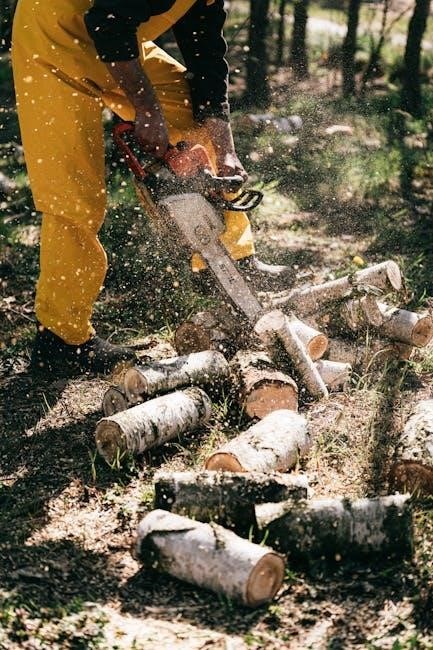
Selecting the correct guide bar is crucial for the Husqvarna 455 Rancher’s performance. Various lengths are available, typically ranging from 18 to 24 inches, influencing cutting capacity and maneuverability. Compatibility depends on the specific 455 Rancher model (455, 455e, or 460) and the pitch of the chain.
X-Force™ laminate bars offer increased durability and reduced weight, while standard bars provide a cost-effective option. Always refer to the Husqvarna parts catalog or dealer to confirm compatibility before purchasing a new guide bar. Using an incompatible bar can lead to reduced cutting efficiency, increased wear, and potential safety hazards. Ensure the bar’s sprocket nose matches your chainsaw’s drive sprocket.
Chain Types and Selection
Choosing the right chain significantly impacts the Husqvarna 455 Rancher’s cutting performance and safety. Common chain pitches include 3/8” and .325”, with chain gauges varying based on bar size. Husqvarna offers several chain types, including X-Cut™ for general purpose cutting and H series chains for heavier-duty applications.
Chain selection should consider the type of wood being cut – softer woods require less aggressive chains, while hardwoods benefit from more robust designs. Always match the chain pitch and gauge to your guide bar. Regularly inspect the chain for sharpness and damage, replacing it when necessary. Using a dull or damaged chain increases the risk of kickback and reduces cutting efficiency.
Replacement Parts Availability
Genuine Husqvarna replacement parts for the 455 Rancher, 455e Rancher, and 460 Rancher are widely accessible. Parts can be sourced through authorized Husqvarna dealerships, both locally and online. Common replacement items include chains, guide bars, sprockets, filters, spark plugs, and carburetor components.
Online retailers specializing in chainsaw parts also carry a comprehensive inventory. When ordering, always verify the part number to ensure compatibility with your specific model and serial number. Using genuine Husqvarna parts guarantees optimal performance and longevity. Non-genuine parts may compromise safety and void warranty coverage. Maintaining a stock of essential parts can minimize downtime and keep your chainsaw operating efficiently.